Ancient Egypt
Theodosia and the Serpents of ChaosAncient Egypt is presented as the setting of archaeological discovery and political struggle, but also as a place whose consequences travel home with the Throckmorton family. The Valley of the Kings and a newly opened section of a pyramid are tied to the family’s research and finds; meanwhile, disputes over antiquities, authority, and recognition shape the work carried out there. Through expeditions recalled at home, Ancient Egypt connects the family’s private history to larger conflicts over who controls the past and who receives credit for uncovering it.
Archaeological Setting and Discoveries
The Throckmortons’ work is grounded in specific sites and research. When Theodosia was two, Alistair Throckmorton spent years studying the likely whereabouts of the tomb of Thutmose III, a powerful pharaoh of Egypt’s New Kingdom. He and Henrietta travelled to the Valley of the Kings to investigate. The expedition succeeded in its archaeological purpose, though its professional outcome was compromised when a colleague betrayed them and Victor Loretti claimed the official discovery.
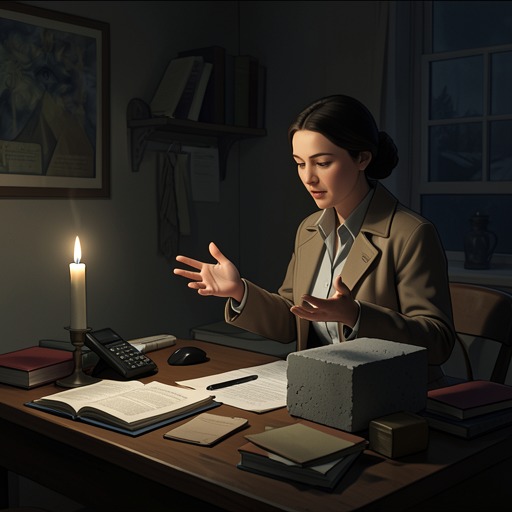
A later expedition produced another significant find. Henrietta returns with a rubbing of tablets from a section of a pyramid that the team had opened. She identifies the writing as Amenemhab’s secret writings on the art of war, and reads its opening as concerning how to cast enemies into chaos. The object brings the archaeological site into the family’s home in tangible form: a rolled parchment, unwrapped for Theodosia to study. Rather than describing the monument at length, the narrative makes the recovered writing the focus, presenting the past through evidence the family can handle, read, and interpret.
Expeditions and Disputed Recognition
The history of the Thutmortons’ first major expedition gives Ancient Egypt a lasting place in the family’s story. Alistair’s research had identified the likely location of Thutmose III’s tomb, and he and Henrietta travelled to the Valley of the Kings to pursue it. The discovery was not credited to him. A colleague’s betrayal enabled Victor Loretti to claim the official recognition, while the British Museum, which employed Alistair at the time, refused to support his claim and accepted Loretti’s version.
That rejection changed Alistair’s professional life: he left the British Museum and joined the Museum of Legends and Antiquities. The episode means that archaeological work in Ancient Egypt is not represented as discovery alone. Research may lead to a successful expedition without securing recognition for the people responsible, and institutional support can determine whose account becomes official. The lost credit also remains present when Henrietta praises Alistair’s research on a later journey, suggesting that the family can acknowledge his work even when the earlier institution did not.
Political Conditions and Antiquities
Henrietta’s account of a more recent visit places excavation within a contested political landscape. She reports that the French have become less assertive, that Americans are moving about with conspicuous enthusiasm, and that Germans are numerous. She also says that von Braggenschnott has gained unexpected influence while deeply involved in smuggling antiquities out of the country. Despite that involvement, he helped persuade local officials to let Henrietta take her discoveries out of the country and bring them home to England. The episode sets practical permission to export finds alongside the illicit removal of antiquities, making the movement of objects itself a point of tension.
Political opposition to British control is another part of the setting. Henrietta says that the Consul General is occupied with the growing Egyptian nationalist movement and its demand that the British evacuate the country. Alistair reacts angrily, blaming Lord Cromer’s autocratic approach and fearing that the conflict could bring the family’s work in the Valley of the Kings to a standstill. These remarks connect archaeological research to the conditions under which it is conducted: political power and local demands can affect whether excavation continues. The account does not elaborate on the movement’s activities, but it makes clear that the expedition takes place amid disagreement over British presence.
The Past Brought Home
For Theodosia, Ancient Egypt is encountered both through family conversation and through material traces of the expeditions. She listens as her parents discuss politics, asks Henrietta about the journey, and receives the parchment rubbing as a gift. The sequence places archaeological knowledge inside ordinary domestic life: discussion at the table gives way to a discovered text, which Theodosia eagerly unrolls and intends to read beside the fire. The physical document carries the expedition’s findings beyond the site where the tablets were found.
The setting therefore joins several strands of the family’s experience: Alistair’s research and lost recognition, Henrietta’s later work and negotiations over discoveries, and Theodosia’s growing interest in the evidence the expeditions bring back. Ancient Egypt is not developed here through a broad description of its landscape or society; its presence emerges instead through named archaeological sites, recovered writing, and conversations about political authority. That focus makes the past both a subject of study and something over which people struggle for access, control, and credit.